
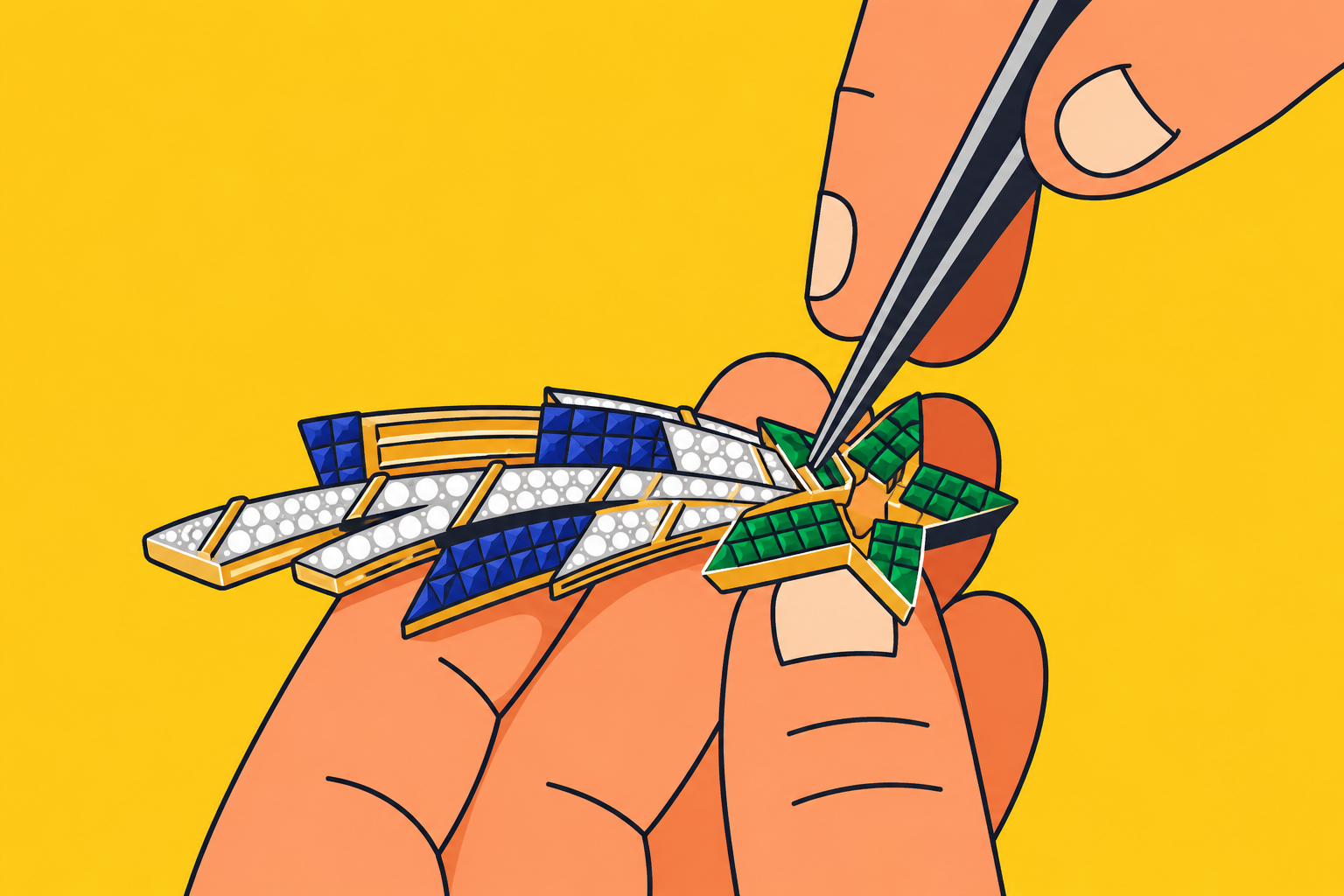
Scroll through any jewellery brand’s Instagram. Gold-toned product shots. A model touching her collarbone. “Timeless elegance” in the caption. Maybe a heritage story about three generations of craftsmanship.
Now scroll through another brand’s page. Same thing.
And another. Same thing again.
Here’s what’s strange about social media marketing for jewellery: it sells personal expression, but most brands have none of their own. Strip the logo off 10 jewellery brands’ feeds and you’d struggle to tell which is which. The product might be exquisite. The photography might be expensive. But the brand? Invisible.
That’s a problem. Because discovery has moved. People find jewellery on Instagram, Pinterest, and increasingly through AI-curated search before they ever walk into a store. In a feed, you get maybe 1.5 seconds. If your visual identity looks like everyone else’s, you’re wallpaper.
The product is table stakes
Great design and quality materials are the minimum. Every serious jewellery brand has them. So when brands lead with “our craftsmanship” or “our heritage” as their core message, they’re saying exactly what their competitors are saying. It’s category speak, and category speak is forgettable.
What separates the brands people actually follow, save, and seek out? A point of view. One of the fundamental tenets of “how to build a jewellery brand”.
Think about what Niessing does with stark minimalism. Or what Bulgari does with colour and Roman maximalism. These brands don’t just make jewellery. They have an opinion about beauty and about what jewellery means in someone’s life. That opinion is the brand.
Building a point of view from the inside out
A point of view doesn’t come from a mood board session or a colour palette exercise. It’s meant to play a central role in a brand’s jewellery branding strategy. It comes from answering uncomfortable questions. Who are we really for? What do we believe about jewellery that other brands don’t? What are we willing to not do?
When we worked on The Jewel Studio’s brand identity at Tonic Worldwide, this is where we started. The founders had a clear conviction: jewellery should feel like self-expression, not like status. That belief shaped everything. The visual language, the typography, the way products were photographed, even the tone of their social copy. The brand identity was the belief made visible.
Most jewellery brands skip this step. They approach jewellery branding agencies with a blanket “make it look premium” mindset, without asking what premium means for them specifically. The result is interchangeable. Safe. Beige (sometimes literally).
From point of view to signature aesthetic
Once you have a clear belief, the aesthetic question becomes simpler. Every visual choice becomes a filter: does this express our point of view, or does it dilute it?
A signature aesthetic isn’t a rigid template. It’s a consistent visual grammar that people recognise before they read the brand name. Colour choices, composition patterns, lighting philosophy, the relationship between product and context.
For WHP Jewellers, the work we did on social media imagery was about finding visual consistency across a wide product range. The challenge with large jewellery houses is that they sell everything from daily wear to bridal, across gold, diamonds, and gemstones. And when the feed has no visual point of view, it reads like a catalogue. Nobody follows a catalogue.
The same principle applied to 1969 and Dhamani, though each needed a completely different aesthetic vocabulary. 1969’s imagery leans into a specific cultural nostalgia. Dhamani’s visual world reflects its position in the luxury market across MENA. Same discipline (build from a belief, express it consistently), different outcomes. That’s the point. A signature aesthetic is a territory only your brand can occupy.
Also, Read: How to Build Brand on Social Media
AI is changing how this gets executed
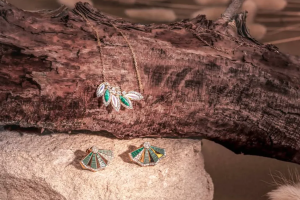
The production side of jewellery imagery is shifting fast. We’ve been using AI for jewellery product shoots at Tonic Worldwide, and the results have reached a point where they’re genuinely usable for social, e-commerce, and even campaign work.
Why this matters for brand building: the cost and time barrier to high-quality product imagery has collapsed. A brand that once needed a full studio shoot to create 50 product images for a new collection can now produce those in hours. That frees up budget and energy for the harder work: figuring out what your images should actually say.
The risk, though, is obvious. If producing imagery becomes cheap and easy, brands will produce more of it. Flooding the feed with more of the same just makes the sameness louder. AI handles the production. Your point of view is still the hard part.
Also, Read: Why Images and Videos are Critical for Engagement?

The brands that will win the next decade
Jewellery isn’t going to get less competitive. New D2C brands launch every week. Social platforms keep compressing attention spans. The brands that will build real equity are the ones that are instantly recognisable in a scroll.
That takes two things. A genuine point of view about what you stand for. And the craft to turn that point of view into a visual and verbal identity that’s unmistakably yours.
The brand is the only moat you actually control.