✦ AI Overview
Policy pagesComparison guidesExpert sources
Tonic helps brands improve how they are found, understood and recommended across Google and AI search. We combine SEO, AEO, GEO, content, technical execution and proprietary Groth intelligence to identify the gaps and act on them.
Traditional SEO helps people find your website in search results. AI search goes a step further. It can now summarize, compare, recommend or cite your brand before anyone visits your site.
Your information needs to be discoverable. Your brand needs to be clearly understood. Your expertise needs credible evidence. And you need to know whether you are appearing in the questions that influence customer decisions.
AI Search Optimization is the practice of improving how a brand is discovered, understood and represented across traditional search engines and AI-generated answers
It combines established SEO foundations with Answer Engine Optimization, Generative Engine Optimization, entity clarity, content strategy, technical optimization, digital authority and AI visibility measurement. It does not replace SEO. It expands the search brief to account for the questions, comparisons, sources and generated answers that increasingly shape discovery and consideration.
Tonic Worldwide has been working in SEO for over two decades. As search has evolved, so has the work. Today, we combine that experience with AEO, GEO, technical execution, content, authority building and proprietary Groth intelligence to help brands compete across traditional and AI-led discovery.






AI SEO services
These three overlap. We plan technical SEO, content, entities, authority and measurement together, so each one makes the others stronger.
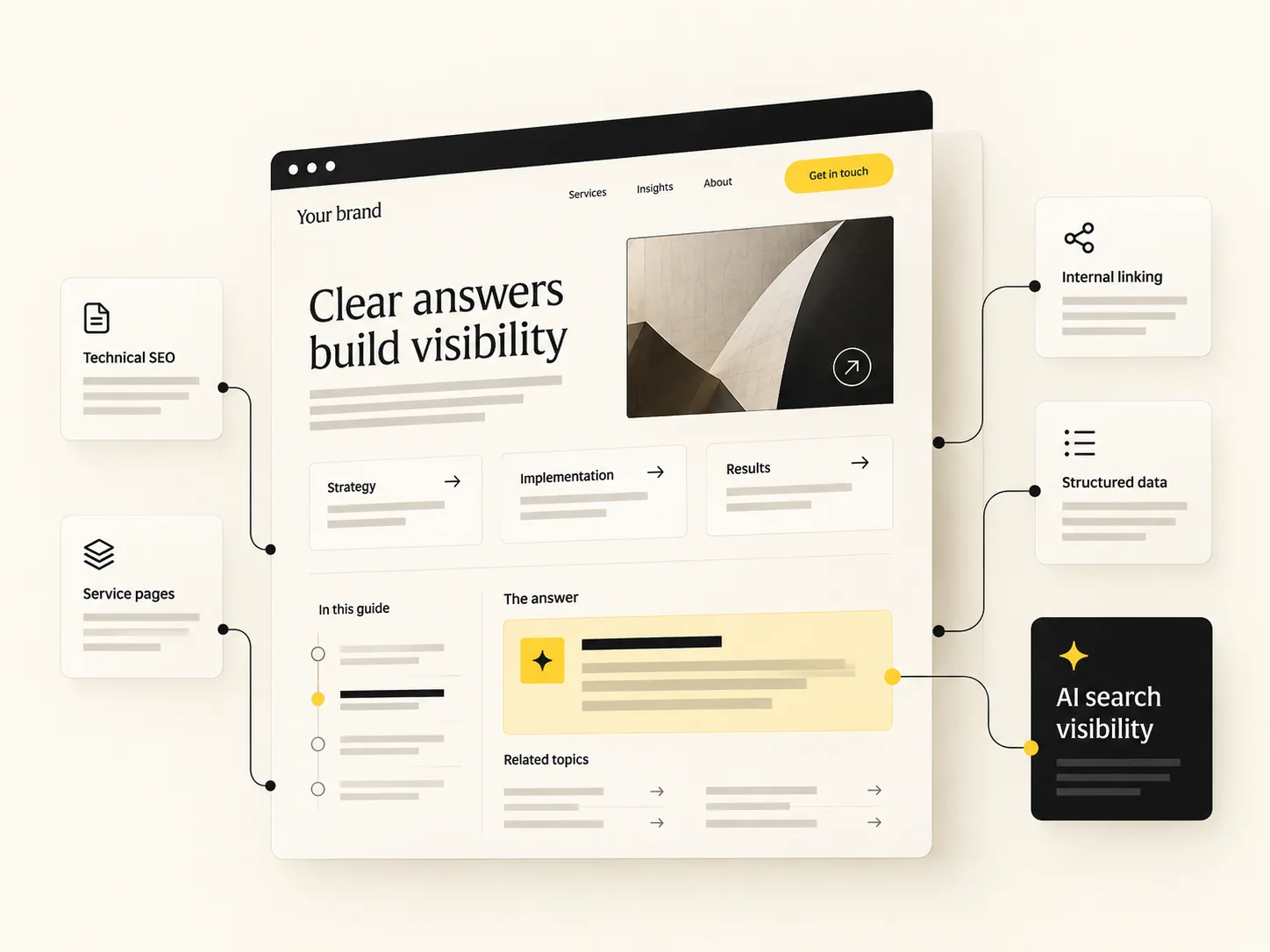
Technical SEO + search demand
AI visibility starts with making important information easy to crawl, index, understand and retrieve. Strong AI search visibility does not compensate for weak search foundations. We fix the foundation first.
Answer Engine Optimization
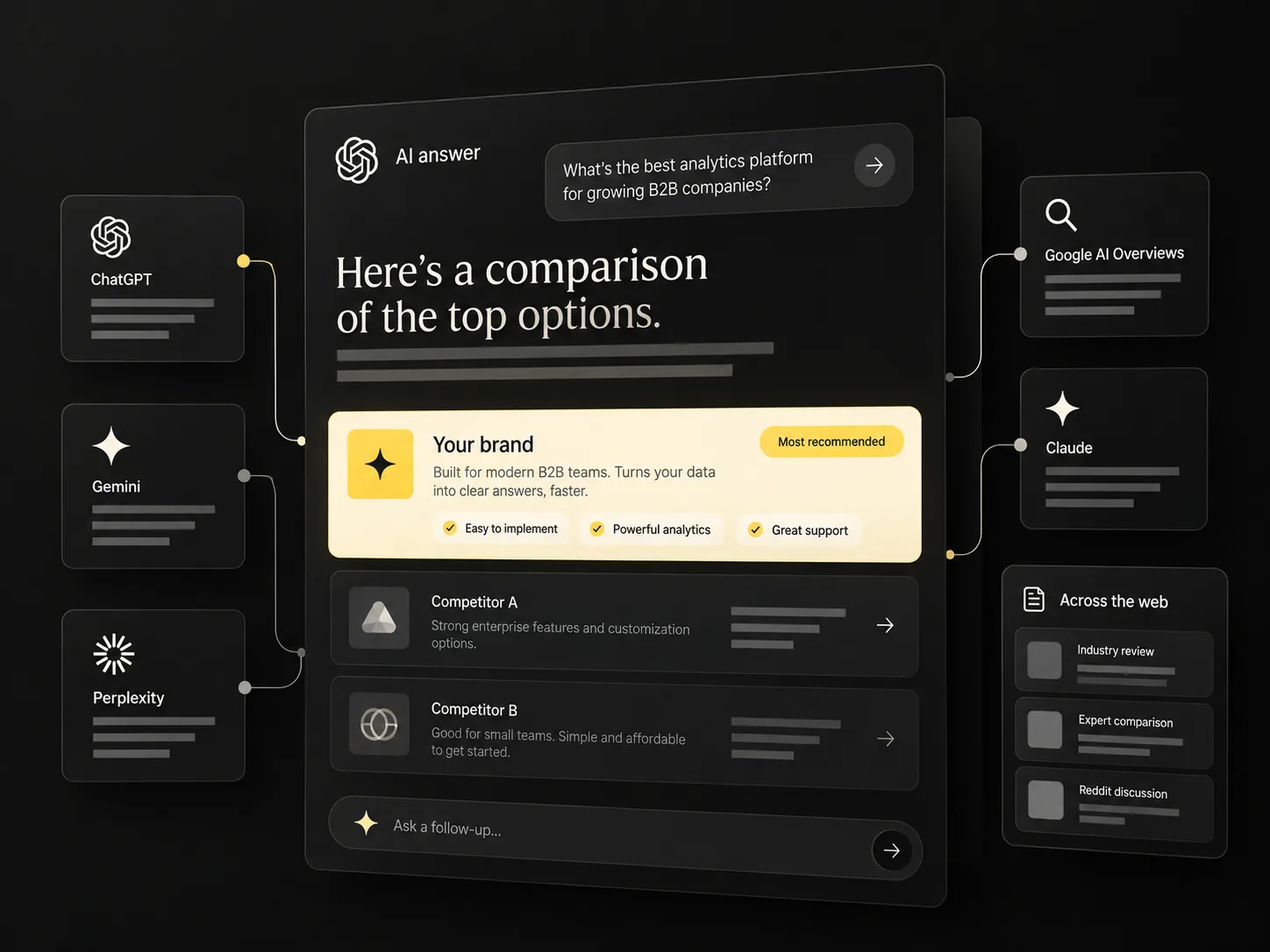
Answer Engine Optimization, or AEO, focuses on how information is structured around the questions people actually ask. We identify high-value questions and improve the content surrounding them so answers are clear, specific and supported by useful context.
The goal is not to reduce every page to short answers. It is to make the right answer easy to identify without removing the depth that makes it credible.
Entity + knowledge architecture
Search engines and AI systems need to understand the relationships between your company, products, services, people, expertise, locations and topics. We strengthen those relationships across your digital ecosystem.
Generative Engine Optimization
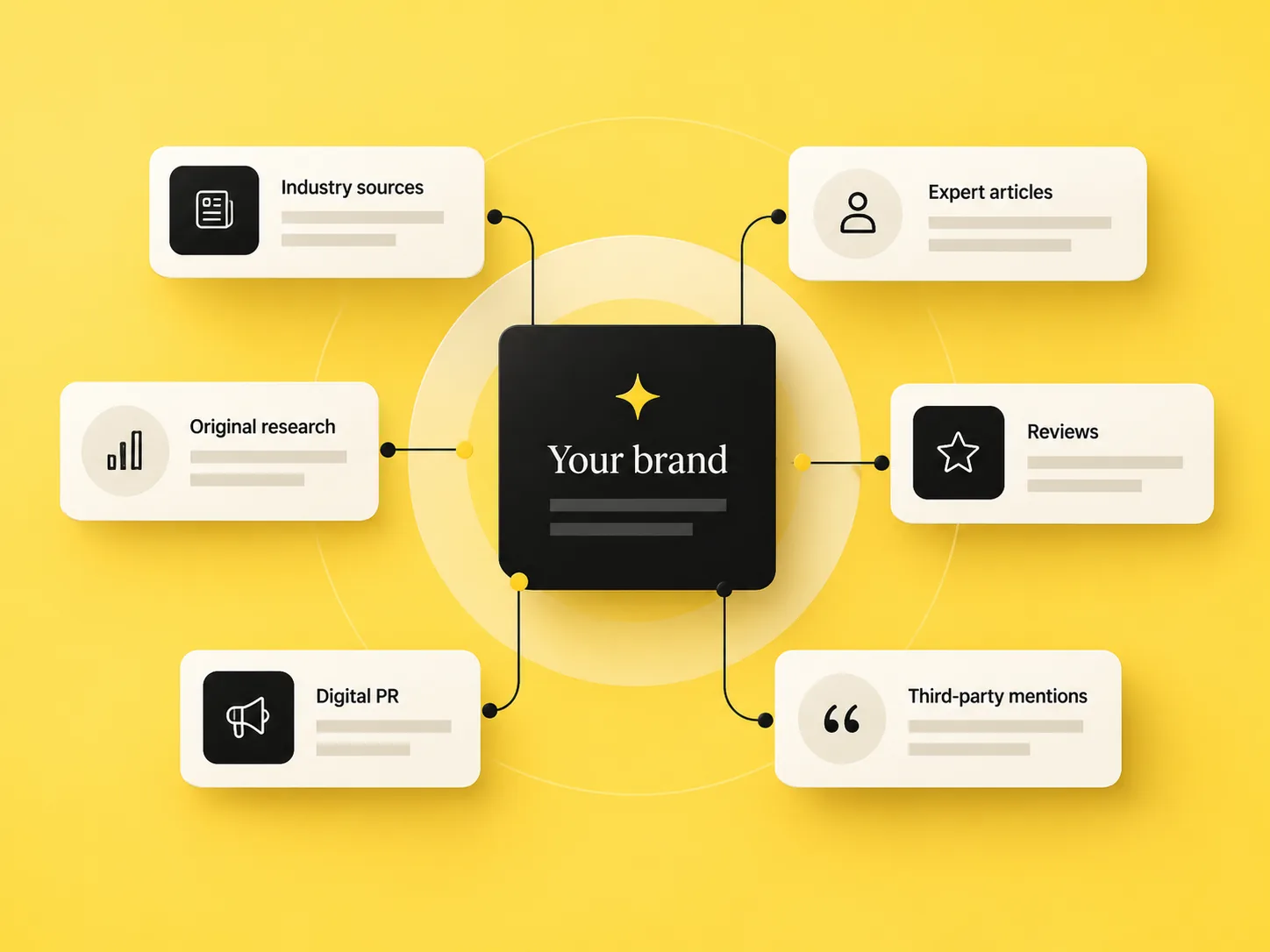
Generative Engine Optimization, or GEO, looks beyond the website itself. AI-generated answers can be influenced by information found across the wider web, including trusted publications, expert sources, reviews, research and third-party references.
AI visibility intelligence
Tonic uses Groth as the intelligence layer behind our AI Search Optimization work, helping us track prompts, mentions, answer surfaces, competitors, sources and visibility patterns so we can see what is changing and what to improve next.
See not only whether the brand appears, but how it is described and compared.
Want to know where your brand is visible and where it is being left out?
Request an AI Visibility Audit ↗The questions customers ask, the evidence they expect and the sources they trust change by industry. The strategy should change with them.
A buyer may ask for the best projects in a micro-market, but the answer can depend on developer reputation, price, configuration, possession, RERA information, connectivity, amenities and investment intent.
Insurance visibility depends on authoritative, current and unambiguous information around coverage, waiting periods, exclusions, network hospitals, claims, premiums and policy wording.
Capabilities, integrations, implementation depth, security, use cases, proof and industry expertise often matter more than publishing another generic service page.
Consumer discovery can move between product features, ingredients, reviews, comparisons, price, availability and use cases. Search content needs to answer those questions while protecting the clarity and desirability of the brand.
Tonic turns AI visibility intelligence into action. We bring search strategy, content, authority, design and development together so the opportunities we uncover do not stop at a report.
AI visibility intelligence shows where the gaps are, which competitors appear instead, what sources shape answers and where your brand has room to grow.
Search strategy, category understanding and commercial context help us separate interesting signals from the opportunities that actually deserve attention.
Technical SEO, content, AEO, GEO, authority, design and development can move through the same team, so the work gets implemented rather than left in a presentation.
Tell us where you want to improve your AI visibility. Tonic will look at the search and AI-answer landscape around your brand, identify the gaps that matter, and recommend the SEO, AEO, GEO, content, authority and technical actions that can strengthen your visibility.
We’ll review your website and the AI-search landscape around your category, then get back to you about the best next step.
Direct answers to the questions buyers typically ask when evaluating AI SEO, AEO, GEO and AI visibility services.
AI SEO is a broad term for optimizing a brand's search presence in an environment where discovery includes both conventional search results and AI-generated answers. It still depends on technical SEO, useful content, authority and strong information architecture, while adding work around answer clarity, entity understanding, generative visibility, source authority and AI visibility measurement.
AI Search Optimization improves how a brand is discovered, understood and represented across traditional search engines and AI-generated answers. Tonic uses the term as an umbrella for connected SEO, AEO, GEO, content, technical, entity and authority work rather than treating each acronym as a separate silo.
Generative Engine Optimization focuses on improving the information ecosystem that helps generative search systems understand when a brand, product or source belongs in an answer. The work can include topical depth, clear entities, product information, expert content, credible third-party references, original research and useful comparison material.
Answer Engine Optimization is the practice of making important information clear, specific and easy to retrieve when users ask direct questions. Good AEO does not mean turning every page into short FAQ fragments. It means making the answer easy to identify while preserving the context and evidence a buyer needs.
SEO focuses on discoverability and organic search performance. AEO focuses on answer clarity and retrievability. GEO focuses on how information and brands are understood and represented in generative search. The disciplines overlap heavily, which is why Tonic manages them as one connected search program.
A strong AI SEO agency should combine traditional SEO with AI visibility analysis, AEO, GEO, entity optimization, content strategy, technical implementation and authority building. It should also be able to measure where the brand appears, which competitors surface and which sources influence the category rather than relying on one-off manual searches.
Tonic combines search strategy and execution with content, creative, design, development and proprietary AI visibility intelligence through Groth. That means the same partner can diagnose the problem, improve the website and content ecosystem, implement technical changes and measure the evolving visibility landscape.
LLM visibility describes how often and how accurately a brand, product, service or topic appears in answers generated by large language model-based systems. Useful analysis considers more than one mention. It looks at prompt and topic coverage, citations, competitor presence, source patterns and the context in which a brand appears.
ChatGPT SEO is an informal term for improving a brand's discoverability and representation in ChatGPT-led research journeys. There is no separate universal ChatGPT ranking formula that replaces SEO. The practical work usually includes crawlability, useful content, clear entities, credible authority and measurement of relevant conversations.
There is no guaranteed switch. The work generally involves improving technical accessibility, building useful topic coverage, strengthening entity clarity, supporting claims with credible evidence, improving third-party authority and measuring the questions where the brand does or does not appear.
We begin with the same fundamentals that support strong Google Search visibility: crawlable pages, high-quality content, clear information architecture, internal linking, technically sound implementation and genuine authority. We then examine the queries and content patterns associated with AI-led results and improve the parts of the search ecosystem that are under the brand's control.
Tonic uses Groth as a proprietary intelligence layer to analyze relevant AI visibility signals such as tracked conversations, brand appearances, citations, recurring sources, topic coverage and competitive presence. Those signals are interpreted alongside conventional organic-search performance, traffic and business outcomes.
No credible provider can guarantee that. Generative systems choose and synthesize information using mechanisms outside any agency's control. Tonic focuses on improving the conditions that make a brand easier to discover, understand and substantiate, then measures what changes.
Yes. Technical accessibility, search intent, site architecture, internal linking, useful content, authority and user experience remain fundamental. AI Search Optimization expands the search brief rather than making traditional SEO obsolete.
Structured data can help search engines understand supported entities and page information, but it should match visible content and should not be treated as a guaranteed AI citation or ranking mechanism. Tonic uses structured data where it has a clear technical and search purpose.
Tonic does not treat llms.txt as a magic AI-ranking switch. We prioritize crawlability, useful content, strong site architecture, entity clarity and credible authority, then evaluate emerging standards according to actual support by the platforms that matter.
Yes. Existing pages are often the best starting point. We assess whether they satisfy the relevant search intent, where they lack clarity or evidence, whether they fit the site's information architecture and whether technical or entity issues are limiting performance.
Where there is a genuine information gap, yes. New content can include service pages, category pages, comparisons, buying guides, expert explainers, FAQs, original research and industry-specific resources. We do not recommend publishing new pages simply because a prompt variation exists.
There is no universal timeline. The starting point, technical condition, category competition, content depth and external authority vary widely. We establish a baseline, prioritize the highest-impact gaps and track changes over time rather than promising an arbitrary number of weeks to “rank in AI.”
That is the commercial objective. Visibility only matters when it improves discovery and consideration among relevant prospects. We therefore connect AI visibility work to search demand, landing-page quality, analytics and lead or revenue outcomes wherever the available tracking allows.
Yes. This service is designed as a global search offering. Strategy can be adapted to different markets, languages, category vocabularies, regulatory contexts and source ecosystems where the required expertise and data are available.
Absolutely. Real estate discovery depends heavily on developer, project and location entities. Insurance requires a higher standard of policy accuracy and authoritative sourcing. Consumer brands depend more on product attributes, reviews and comparisons. We build the topic and evidence model around the category instead of applying the same prompt list everywhere.
904/905, Eureka Towers Wing B,
Mindspace, Chincholi Bunder Road,
Malad (w), Mumbai, 400064
1101/1301 Floor Single Business Tower
Business Bay, Sheikh Zayed Road Dubai
UAE PO Box – 36677 Office No 30 41
15235 Sand Canyon Ave. Ste. 100,
Irvine, CA 92618
Write to us : [email protected]
© 2026 Tonic Worldwide. All Rights Reserved.
Privacy Policy


We will get in touch with you shortly!
